


Espresso pairing is all about finding the right balance between coffee intensity and food flavors. This guide...
Please, visit the correct shop for your location:
International Site


It looks like you are not from the USA,
please visit the correct shop for your location:


 Espresso Machines
Coffee Grinders
Set
Accessories
Coffee
Pour Over
Design Collection
Deals
Best Of Black Friday
Brands
Espresso Machines
Coffee Grinders
Set
Accessories
Coffee
Pour Over
Design Collection
Deals
Best Of Black Friday
Brands
Espresso Coffee Shop
+Assistance and services
+-
 Espresso Pairing Guide: Foods That Complement Your CoffeeRead more08/31/2026
 -
 Coffee Catering Services: Mobile Espresso Solutions for EventsRead more
Coffee catering brings a complete espresso experience directly to weddings, corporate events, private parties, and...
08/27/2026 -
 Coffee Shop Design: Creating the Perfect Espresso Bar LayoutRead more
Designing the perfect coffee shop layout starts with creating an efficient espresso bar workflow. A well-planned...
08/25/2026 -
 Specialty Coffee Trends: Staying Competitive in the Espresso MarketRead more
Specialty coffee trends are transforming the espresso market as consumers increasingly prioritize quality,...
08/25/2026 -
 Espresso Machine Leasing vs Buying: What's Best for Your Business?Read more
Should you lease or buy an espresso machine for your business? This guide compares the costs, benefits, and long-term...
07/14/2026 -
 Espresso and Health: Benefits, Caffeine Content, and Wellness ConsiderationsRead more
Wondering how espresso affects your health? Learn how much caffeine is in a shot, what research says about...
07/14/2026 -
 Espresso Gift Guide: Perfect Presents for Coffee EnthusiastsRead more
Discover practical espresso gift ideas for every budget with this guide from Espresso Coffee Shop USA. From...
07/08/2026 -
 Office Coffee Solutions: Bringing Quality Espresso to the WorkplaceRead more
Create a better workplace coffee experience with the right office coffee solutions. This guide explains how to choose...
07/08/2026 -
 Italian Espresso Bar Etiquette: How to Order Like a LocalRead more
Discover the essential etiquette of an Italian espresso bar, from ordering coffee like a local to understanding when...
07/08/2026 -
 Sustainable Espresso: Eco-Friendly Practices and Equipment for 2026Read more
A sustainable espresso setup combines high-quality coffee with environmentally responsible choices. From durable,...
06/23/2026
Blog categories
Search in blog
Italian Espresso Bar Etiquette: How to Order Like a Local
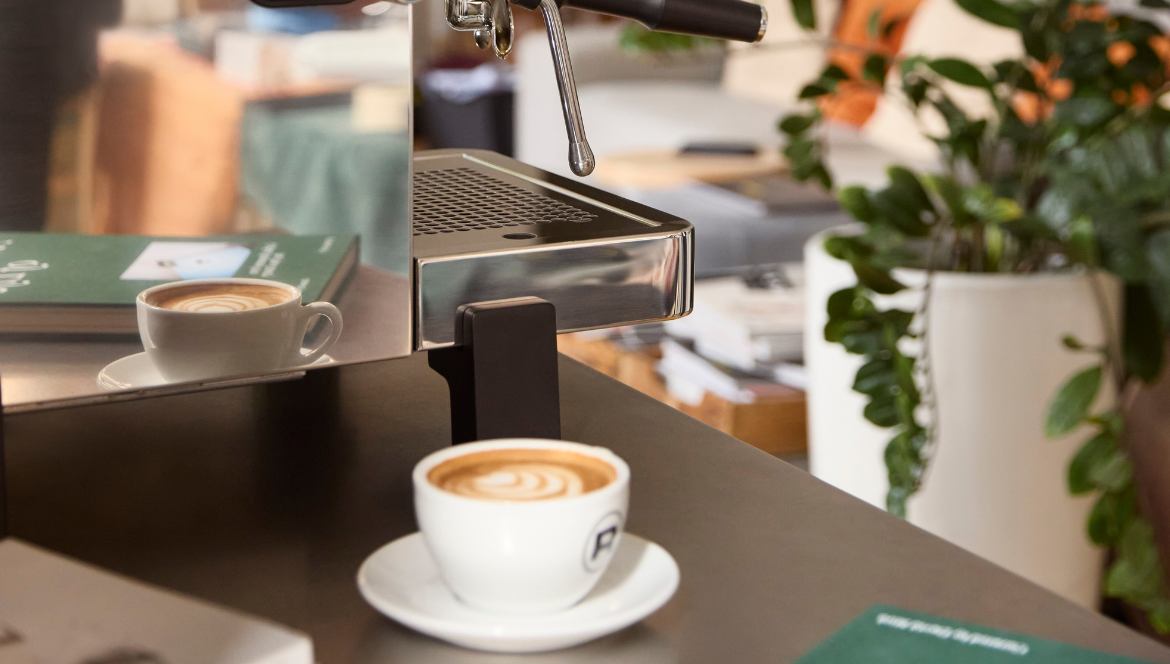
Italian espresso bar etiquette is one of those things visitors to Italy rarely read about in advance and almost always wish they had. Walk into any neighborhood bar in Milan, Naples, or Verona, and the rhythm is immediately clear to those who belong there and quietly baffling to those who do not. Italians order fast, stand at the counter, drink espresso in three or four unhurried sips, and move on. The ritual takes less than five minutes and follows an unspoken set of customs locals use naturally. This guide decodes those customs so that when you step up to the bar or recreate the experience at home, you know exactly what you are doing and why.
What Actually Happens Inside an Italian Espresso Bar
The Counter Is Where Italians Drink
The single most disorienting moment for a first-time visitor to an Italian bar is realizing that standing at the counter is not just acceptable; it is the default. In Italy, the bar counter is where espresso is consumed, and sitting at a table is a separate, more expensive choice reserved for a longer visit or a moment when you want to watch the street go by rather than grab your coffee and continue your morning. This is the first rule to understand before anything else.
At the counter, you order, pay (often in advance at the cassa, the small cash register near the entrance, before handing your receipt to the barista), receive your espresso, and drink it there. The exchange is efficient, warm, and completely unhurried in its own way. Italian baristas move fast, but nobody rushes you once your coffee is in hand. That flow is what makes the system feel so natural.
The receipt-first system varies by region and establishment, but in traditional bars, particularly in Southern Italy, paying before ordering is standard practice. Watching the person ahead of you in line will tell you everything you need to know in about thirty seconds.
How to Order the Right Coffee at the Right Time of Day
Un Caffè Is Never Just Coffee
When an Italian asks for "un caffè," they mean a single shot of espresso. That is it. No size modifiers, no milk options embedded in the name, no temperature specification. A caffè is a small, intensely concentrated shot served in a ceramic demitasse cup, drunk standing at the bar, and finished quickly. This is the baseline order behind everything else.
Italian espresso bar etiquette places real emphasis on timing. Cappuccino is a morning drink, full stop. Ordering a cappuccino after 11 a.m. will not get you arrested, but it will immediately mark you as someone who does not understand the culture, because Italian logic is sound: a milk-heavy drink after a meal sits badly in the stomach, and Italians do not do that to themselves after lunch or dinner. This timing rule shapes the rest of the menu.
Post-meal coffee is always espresso. Sometimes a macchiato, an espresso with a small amount of foamed milk for those who find a straight shot too intense. But never a cappuccino, and certainly never a latte. That distinction keeps the meal-to-coffee transition consistent.
The Drinks Worth Knowing
An espresso (or caffè) is the foundation of everything. A caffè macchiato adds a small cloud of milk foam. A caffe lungo uses more water for a longer, milder extraction. A caffè ristretto uses less water for a shorter, more concentrated shot. A marocchino, particularly common in Northern Italy, layers espresso, cocoa, and milk foam in a small glass. These are the main variations built from the same starting point.
None of these is a complicated order. Knowing which one you want before you reach the counter is what separates a local-feeling exchange from an apologetic, fumbling one.
The Italian Espresso Bean Behind the Bar Culture
Why the Bean Choice Defines the Experience
Italian espresso bar etiquette is inseparable from Italian espresso culture, and Italian espresso culture is built on a specific approach to the bean: a preference for medium roasts, careful blending of Arabica and Robusta, and an artisanal roasting tradition passed down through family-run torrefazioni for generations. Those choices shape the bar experience from the start.
The beans that define the most respected bars in Northern Italy are not the industrial brands sold on supermarket shelves. They are small-batch, hand-roasted coffees with traceable origins and roast philosophies built on consistency and character.
Laboratorio di Torrefazione Giamaica Caffè, based in Verona, is one of Italy's top premium coffee roasters chosen by premium bars and three Michelin-starred restaurants alike. The roastery, founded in 1947, still uses the original roasting machinery with direct, open-flame roasting, making it almost certainly the last roaster in the world to work this way. Production is intentionally small.
This is the kind of coffee being served in the bars where Italian espresso bar etiquette was shaped. It is the opposite of mass production, and that philosophy is precisely why the experience of drinking espresso in Italy feels unlike anywhere else. That connection between coffee and custom is the point.
At Espresso Coffee Shop USA, the full Giamaica Caffè range is available for home brewing:
The Giamaica Caffè Giovanni Erbisti 1947 Whole Beans 0.5 kg features an aroma of walnuts, honey, and chocolate, with low caffeine content and high digestibility.
The Giamaica Caffè Cuba Whole Beans 0.5 kg is a 100% natural Arabica harvested and selected by hand, delivering an intense bitter-sweet, full-bodied, and penetrating flavor with a light aroma of spices and the scent of honey and raw sugar.
The Giamaica Caffè Guatemala Whole Beans 0.5 kg is a 100% Arabica selected and roasted using the direct-flame, hand-roasted tradition in a small artisan factory in the center of Verona, a pure coffee from one of the world's most important coffee-producing regions.
And for those who want something genuinely rare, the Giamaica Caffè Porto Rico Fino AA is a limited production washed Arabica harvested cherry by cherry entirely by hand, with a slightly acidic, full-bodied, and clean aroma resulting in a strong and intense cup of coffee that disappeared from Europe for more than 70 years before Giamaica Caffè brought it back.
Recreating Italian Bar Espresso at Home
The Machine and the Ritual Both Matter
The Italian bar experience is not just about the beans; it is about the pressure, the temperature, and the ritual of preparation. The espresso machines behind the counters of respected Italian bars are precision instruments tuned to extract at 9 bars of pressure and 93 degrees Celsius, pulling shots in 25 to 30 seconds with a thick, reddish-brown crema that dissipates slowly. Those details are what make the ritual work.
Recreating that experience at home requires equipment built to the same standard. Espresso Coffee Shop USA carries the Italian machine brands Rocket Espresso, La Marzocco, Lelit, and ECM, all of which share the same engineering philosophy as the machines behind Italian bar counters. Paired with a dedicated burr grinder and the right Giamaica Caffè beans for your palate, the home setup becomes a close approximation of the standing-at-the-bar morning ritual that defines Italian coffee culture. In this way, the home setup follows the bar's logic.
Browse Italian espresso machines at Espresso Coffee Shop USA → Explore the full Giamaica Caffè range →
A Few Customs Worth Remembering Before You Go
Italian espresso bar etiquette includes a handful of practical details that do not require much explanation but are worth knowing before you arrive.
Tipping is not standard at an Italian bar. It happens occasionally, but the social contract is different from American café culture: a gratuity is a gesture, never an expectation. The coffee price is also regulated in many regions and is often lower than anything you would find in a US coffee shop: a standard espresso at the bar frequently costs under two euros.
Ordering a "latte" in Italy will bring you a glass of milk. The drink Americans call a latte is a caffè latte in Italian, and saying so correctly matters if you want milk-and-coffee rather than just milk. The misunderstanding is common enough that most Italian baristas in tourist cities will understand either way, but using the correct name is a small courtesy that signals you made the effort to understand the culture before showing up.
Frequently Asked Questions About Italian Espresso Bar Etiquette
Q: Should I sit or stand when drinking espresso in an Italian bar?
A: Standing at the counter is the local custom and is typically less expensive than sitting at a table. Table seating in Italian bars usually incurs a coperto, or table charge, and is intended for longer visits. For a quick espresso the way locals drink it, ordering at the counter is the correct choice.
Q: Is it rude to order a cappuccino after lunch in Italy?
A: Not rude in a confrontational sense, but it does mark you as a tourist. Italian custom holds that milk-heavy drinks are a morning choice and unsuitable after meals because of their effect on digestion. Ordering an espresso or a macchiato after lunch or dinner is the culturally correct choice.
Q: What does "un caffè" mean in an Italian bar?
A: Un caffè means a single shot of espresso. It is the default coffee order in Italy and requires no further specification. If you want something longer, ask for a caffè lungo. If you want something shorter and more concentrated, ask for a ristretto.
Q: Why is espresso in Italy cheaper than in the US?
A: Coffee prices in Italy are partly historical: espresso has been a daily staple across all income levels for generations, and pricing reflects that cultural role. Prices are also informally regulated by regional tradition. The result is that a bar espresso in Italy often costs under two euros, less than half the price of a comparable drink in most American cities.
Q: How can I recreate authentic Italian espresso at home?
A: The closest home approximation of Italian bar espresso requires three things: an espresso machine capable of reaching 9 bars of pressure at 93 degrees Celsius, a quality burr grinder to produce consistent fine-grind particles, and beans roasted in the Italian tradition. The Giamaica Caffè range, available through Espresso Coffee Shop USA, is roasted in Verona using a direct-flame, open-fire method unchanged since 1947, and is of the same quality tier as that used by premium bars and Michelin-starred restaurants in Italy.
Related posts
-
 Understanding Espresso Machines: Single Boiler, Dual Boiler, and Heat Exchanger Models
Choosing the right espresso machine can elevate your coffee experience to new heights. At Espresso Coffee Shop we...Read more
Understanding Espresso Machines: Single Boiler, Dual Boiler, and Heat Exchanger Models
Choosing the right espresso machine can elevate your coffee experience to new heights. At Espresso Coffee Shop we...Read more -
 Flat or conical burrs? That is the question
The coffee grinder is among the most important equipment for any barista and home barista. When it comes to choosing...Read more
Flat or conical burrs? That is the question
The coffee grinder is among the most important equipment for any barista and home barista. When it comes to choosing...Read more -
 Arabica vs. Robusta: the main differences between the two most popular coffee varieties
When it comes to choosing the perfect coffee, there are two names that immediately come to mind: Arabica and...Read more
Arabica vs. Robusta: the main differences between the two most popular coffee varieties
When it comes to choosing the perfect coffee, there are two names that immediately come to mind: Arabica and...Read more -
 The first store Espresso Coffee Shop in Italy!
We are excited to announce the opening of our Temporary Shop in Milan, an must-visit meeting point for all coffee...Read more
The first store Espresso Coffee Shop in Italy!
We are excited to announce the opening of our Temporary Shop in Milan, an must-visit meeting point for all coffee...Read more -
 Different types of group heads: complete guide to help you choose the right espresso machine
When choosing an espresso machine, the group head is one of the most important components to consider. It plays a key...Read more
Different types of group heads: complete guide to help you choose the right espresso machine
When choosing an espresso machine, the group head is one of the most important components to consider. It plays a key...Read more
Leave a comment