


Espresso pairing is all about finding the right balance between coffee intensity and food flavors. This guide...
Please, visit the correct shop for your location:
International Site


It looks like you are not from the USA,
please visit the correct shop for your location:


 Espresso Machines
Coffee Grinders
Set
Accessories
Coffee
Pour Over
Design Collection
Deals
Best Of Black Friday
Brands
Espresso Machines
Coffee Grinders
Set
Accessories
Coffee
Pour Over
Design Collection
Deals
Best Of Black Friday
Brands
Espresso Coffee Shop
+Assistance and services
+-
 Espresso Pairing Guide: Foods That Complement Your CoffeeRead more08/31/2026
 -
 Coffee Catering Services: Mobile Espresso Solutions for EventsRead more
Coffee catering brings a complete espresso experience directly to weddings, corporate events, private parties, and...
08/27/2026 -
 Coffee Shop Design: Creating the Perfect Espresso Bar LayoutRead more
Designing the perfect coffee shop layout starts with creating an efficient espresso bar workflow. A well-planned...
08/25/2026 -
 Specialty Coffee Trends: Staying Competitive in the Espresso MarketRead more
Specialty coffee trends are transforming the espresso market as consumers increasingly prioritize quality,...
08/25/2026 -
 Espresso Machine Leasing vs Buying: What's Best for Your Business?Read more
Should you lease or buy an espresso machine for your business? This guide compares the costs, benefits, and long-term...
07/14/2026 -
 Espresso and Health: Benefits, Caffeine Content, and Wellness ConsiderationsRead more
Wondering how espresso affects your health? Learn how much caffeine is in a shot, what research says about...
07/14/2026 -
 Espresso Gift Guide: Perfect Presents for Coffee EnthusiastsRead more
Discover practical espresso gift ideas for every budget with this guide from Espresso Coffee Shop USA. From...
07/08/2026 -
 Office Coffee Solutions: Bringing Quality Espresso to the WorkplaceRead more
Create a better workplace coffee experience with the right office coffee solutions. This guide explains how to choose...
07/08/2026 -
 Italian Espresso Bar Etiquette: How to Order Like a LocalRead more
Discover the essential etiquette of an Italian espresso bar, from ordering coffee like a local to understanding when...
07/08/2026 -
 Sustainable Espresso: Eco-Friendly Practices and Equipment for 2026Read more
A sustainable espresso setup combines high-quality coffee with environmentally responsible choices. From durable,...
06/23/2026
Blog categories
Search in blog
Specialty Coffee Trends: Staying Competitive in the Espresso Market
Specialty coffee trends are reshaping the espresso market at a pace that is leaving underprepared businesses behind and creating real opportunity for those who understand where consumer expectations are heading. The global specialty coffee market was valued at USD 111.5 billion in 2025 and is projected to reach USD 123.3 billion in 2026, growing at a CAGR of 10.6% through 2036. That growth is not random it is being driven by specific, identifiable shifts in how people think about coffee, what equipment they are investing in, and what they expect from the businesses that serve them. Whether you run a specialty cafe, operate a small roastery, or are a serious home barista making deliberate equipment decisions, the trends shaping this market in 2025 and 2026 are directly relevant to what you should be doing next.
What Is Driving Specialty Coffee Trends in 2026?
The single most consequential shift in the specialty coffee market right now is the ongoing movement from volume-driven coffee consumption toward quality-driven consumption. Consumers are not drinking more coffee; they are paying more attention to what they drink and demanding a higher standard from every cup. Key drivers include a growing coffee culture at 44%, the premiumization trend at 39%, increasing cafe chains at 36%, and health-conscious consumers at 33% shaping market expansion.
This shift is most visible in the espresso segment, where the gap between mass-market and specialty is clearest. An espresso pulled from a properly calibrated prosumer machine with a well-sourced single-origin bean is a fundamentally different product from a pod-based shot, and the consumers driving specialty market growth understand and seek out that difference.
Premiumization: Why Consumers Are Spending More Per Cup
Premiumization means consumers are consistently choosing higher-quality, higher-priced products across the coffee category. In practical terms, it means they are paying more per bag of beans, more for an in-cafe experience that reflects genuine craft, and significantly more for home equipment that gives them meaningful control over extraction quality.
This trend is accelerating partly because of transparency. Subscription services for specialty coffee beans are gaining traction alongside direct-trade sourcing models that let consumers understand where their coffee comes from and who produced it. That transparency creates loyalty in a way that generic commercial coffee never could, and businesses that build their offering around traceable, high-grade beans are benefiting from it consistently.
The Third-Wave Effect on Espresso Bars and Home Setups
The third-wave coffee movement, which treats coffee as an agricultural product worth understanding at the origin level, has moved from niche positioning to mainstream expectation in many urban markets. What was considered advanced enthusiast behavior five years ago (single-dosing, precision scales, dialing in by extraction yield rather than intuition) is now a standard approach among engaged home baristas and a baseline expectation in serious specialty cafes.
For espresso specifically, this means that variables once considered too technical for general audiences pre-infusion, pressure profiling, grind particle distribution are now the language of a growing segment of the market. Businesses that can speak to and deliver on these variables are gaining ground over those that cannot.
Equipment Trends Shaping the Specialty Coffee Market
The equipment market is responding to specialty coffee trends with a clear signal: home brewers are increasingly investing in lab-level equipment such as precision grinders and smart espresso machines to replicate the café experience, with the home application segment growing at a CAGR of 11.8%. This is the fastest-growing segment in the espresso equipment market, and it is directly driven by the premiumization trend described above.
Home Espresso Investment Is Outpacing the Café Segment
For the first time in the history of the espresso machine market, the home segment is growing faster than the commercial segment. Consumers who previously reserved specialty espresso for cafe visits are building serious home setups with dual-boiler machines, commercial-grade burr grinders, and precision scales. This is the prosumer category: equipment designed with commercial-grade components in a home-appropriate footprint.
Espresso Coffee Shop USA serves exactly this segment. The site carries the Italian prosumer brands Rocket Espresso, Lelit, ECM, and Rancilio that sit at the intersection of home convenience and commercial performance, alongside Mahlkönig grinders and Acaia scales that give home baristas the same precision tools used in specialty cafes. For buyers navigating the specialty coffee market trend toward home investment, this is where the most relevant equipment decisions are made.
The Rocket Appartamento TCA is the heat-exchanger machine most directly suited to a home barista operating in the third-wave framework of simultaneous brewing and steaming, Italian craftsmanship, and a compact footprint that fits naturally on a kitchen counter without dominating it. The Eureka Mignon Specialita pairs with it as the stepless flat-burr grinder that delivers the grind precision the specialty trend demands at a home-appropriate price point.
For buyers ready to move into the most capable tier of home espresso, the Rocket R Nine One brings dual-boiler architecture, pressure profiling, and commercial-grade thermal stability the equipment response to the third-wave expectation of precise, repeatable extraction quality.
How Coffee Businesses Stay Competitive in the Espresso Market
Sustainability as a Competitive Signal, Not Just a Value
Sustainability is no longer a differentiator; it is an expectation. A dominant trend shaping the specialty coffee market is the growing demand for sustainably sourced and ethically produced coffee beans, as consumers become more conscious about environmental and social impact. For cafes and roasters, this means that bean sourcing decisions are now visible brand decisions. Customers ask questions, read labels, and choose businesses that can answer credibly.
The practical implication for equipment buyers is that the tools enabling consistency and quality precision grinders, accurate scales, temperature-stable machines are also the tools that allow a business to make and keep sourcing promises credibly. A beautifully sourced single-origin coffee pulled inconsistently undermines the sourcing story. Equipment quality is how the sourcing investment is protected in the cup.
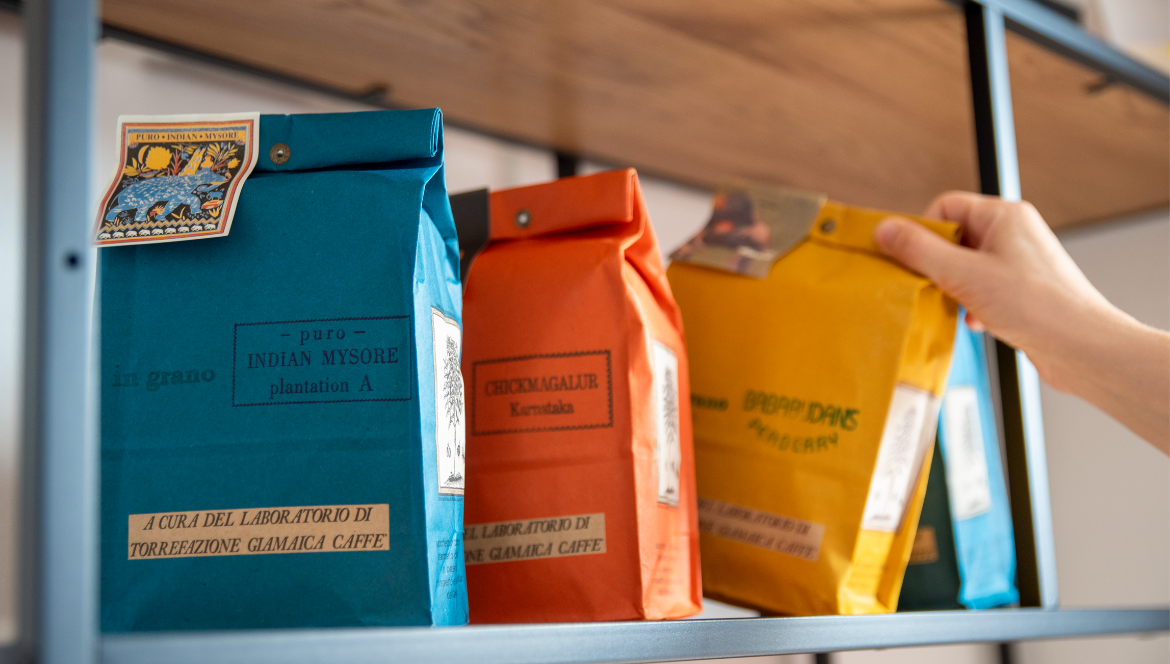
Giamaica Caffè, available through Espresso Coffee Shop USA, represents the kind of traceable, artisan-roasted Italian specialty coffee that the premiumization trend is built around. Hand-roasted in Verona using open-flame machinery unchanged since 1947, chosen by Michelin-starred restaurants and premium bars, it is the sourcing story that serious home baristas and small cafe operators can build a specialty offer around.
AI, Gravimetric Dosing, and Precision Brewing
A newer equipment trend running through the specialty coffee market in 2026 is the adoption of gravimetric dosing integrated scales in grinders and machines that dose by weight rather than time. This removes the single largest variable in consistent extraction: the human dose. As the specialty coffee market matures, the expectation of dose precision across every shot is becoming standard at the prosumer and commercial tiers.
The Acaia Lunar Scale, a staple in specialty cafes worldwide, provides this precision for home setups and small cafe operations at a level that rivals integrated gravimetric systems, while retaining the flexibility to work with any machine and any workflow.
FAQ's
Q: What are the biggest specialty coffee trends in 2025 and 2026?
A: The most significant trends are premiumization (consumers paying more per cup and investing in better home equipment), single-origin and sustainable sourcing, the growth of the third-wave movement into mainstream markets, and the rapid expansion of the home espresso equipment segment, which is now growing at 11.8% annually faster than the commercial café segment.
Q: What is the premiumization trend in coffee?
A: Premiumization refers to the sustained consumer shift toward higher-quality, higher-priced coffee products across beans, equipment, and in-cafe experiences. It is driven by greater transparency around sourcing, growing coffee literacy among younger consumers, and the normalization of specialty coffee as a daily standard rather than an occasional treat.
Q: How is home espresso investment changing the market?
A: The home application segment is growing at a CAGR of 11.8%, outpacing the café segment, as consumers invest in precision grinders, smart espresso machines, and lab-grade accessories to replicate the café experience at home. This is creating a new prosumer category that bridges home convenience and commercial performance.
Q: How can a coffee shop stay competitive amid specialty coffee trends?
A: The most effective strategies are investing in equipment precision (grinders and scales that ensure shot-to-shot consistency), building a sourcing story around traceable, high-grade beans, training staff to speak knowledgeably about extraction, and positioning the cafe around the third-wave values of transparency, craft, and quality that the premium market segment increasingly expects.
Q: What role does sustainability play in specialty coffee trends?
A: Sustainability is now a baseline expectation rather than a differentiator. Consumers choosing specialty coffee consistently prioritize ethically sourced, environmentally responsible products. Businesses that cannot articulate their sourcing practices credibly are losing ground to those that can, making bean sourcing one of the most strategically important decisions in a specialty coffee business.
Related posts
-
 Understanding Espresso Machines: Single Boiler, Dual Boiler, and Heat Exchanger Models
Choosing the right espresso machine can elevate your coffee experience to new heights. At Espresso Coffee Shop we...Read more
Understanding Espresso Machines: Single Boiler, Dual Boiler, and Heat Exchanger Models
Choosing the right espresso machine can elevate your coffee experience to new heights. At Espresso Coffee Shop we...Read more -
 Flat or conical burrs? That is the question
The coffee grinder is among the most important equipment for any barista and home barista. When it comes to choosing...Read more
Flat or conical burrs? That is the question
The coffee grinder is among the most important equipment for any barista and home barista. When it comes to choosing...Read more -
 Arabica vs. Robusta: the main differences between the two most popular coffee varieties
When it comes to choosing the perfect coffee, there are two names that immediately come to mind: Arabica and...Read more
Arabica vs. Robusta: the main differences between the two most popular coffee varieties
When it comes to choosing the perfect coffee, there are two names that immediately come to mind: Arabica and...Read more -
 The first store Espresso Coffee Shop in Italy!
We are excited to announce the opening of our Temporary Shop in Milan, an must-visit meeting point for all coffee...Read more
The first store Espresso Coffee Shop in Italy!
We are excited to announce the opening of our Temporary Shop in Milan, an must-visit meeting point for all coffee...Read more -
 Different types of group heads: complete guide to help you choose the right espresso machine
When choosing an espresso machine, the group head is one of the most important components to consider. It plays a key...Read more
Different types of group heads: complete guide to help you choose the right espresso machine
When choosing an espresso machine, the group head is one of the most important components to consider. It plays a key...Read more
Leave a comment